
Imagine finding a small self-declared country in the United States. It has its own history and quirky charm. These micronations show the creative and funny side of humans.
Across America, there are places that claim to be their own countries. They are not recognized by big governments. But, exploring these micronations can be fun and cheap. With smart planning, you can save up to 60% on your trip.
Looking into these small self-declared countries uncovers interesting stories. You’ll learn why they were made. As we look at the 11 independent micro-nations in the US, you’ll see their unique histories.
The Fascinating World of US Micro-Nations
Micronations, or miniature nations, are a fun part of American culture. These tiny countries aren’t recognized by the world or the US government. But they show the creative and funny side of American society.
People create micronations for many reasons. Some want to try out new political and social ideas. Others use them to protest or express themselves artistically. Many just enjoy the fun and creativity of making their own tiny world.
The micronation movement has grown a lot lately. Many tiny countries have popped up in the US. They have their own governments, laws, and even money, just like real countries.
Some common things about micronations include:
- They claim to rule over a certain area, like a backyard or land
- They set up their own governments or leaders
- They make symbols like flags, coats of arms, and money
- They talk and deal with other tiny countries or real ones
The world of american microstates is full of creativity and smart ideas. By looking at these tiny nations, we see the fun and complex side of them.
The Republic of Molossia: Nevada’s Sovereign Anomaly
In the Nevada desert, the Republic of Molossia is a unique example of micro-nationalism. It was founded in 1977 by Kevin Baugh and James Spielman. Their goal was to create an autonomous territory that stands on its own.
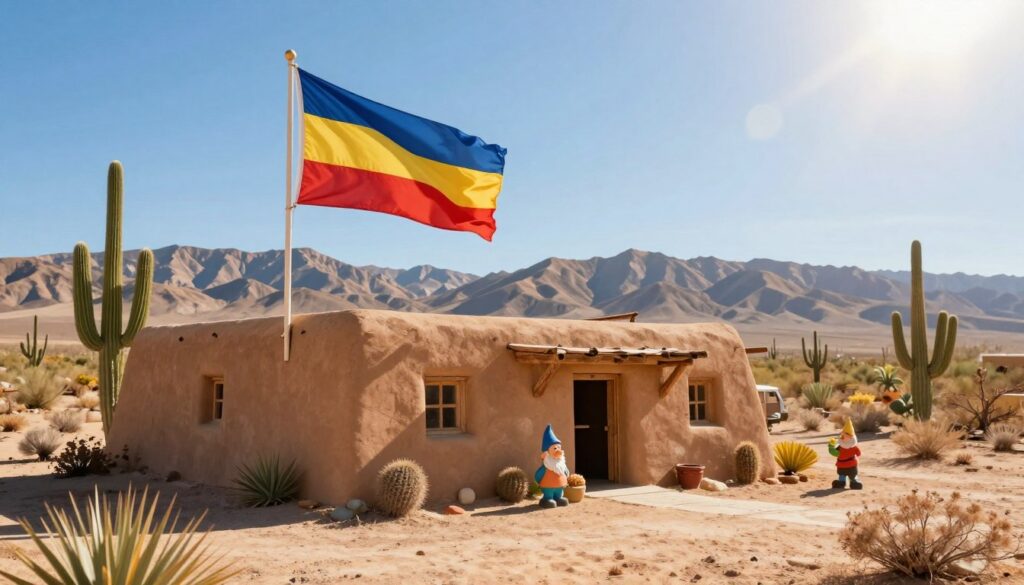
In 1998, Kevin Baugh bought land in Nevada. This made Molossia a real place with its own government and autonomous territories.
Exploring Molossia’s Claims and Activities
Molossia does many things that show it’s a real micronation. It has its own money, stamps, and even a national anthem. It also talks to other micronations, showing it’s a true sovereign.
The Republic of Molossia is more than just a fun idea. It deeply explores micro-nationalism and autonomous territories. Its actions challenge old ideas about being a country, offering a fresh view on nationhood.
Molossia is a big deal in the world of micro-nationalism. It makes people think about what it means to be a nation. Its story is full of questions about sovereignty and the future of small countries.
The Kingdom of Talossa: Milwaukee’s Bedroom Nation
The Kingdom of Talossa started in a Milwaukee bedroom in 1979. A teenager founded it as a joke. But it grew into a real nation with its own culture, language, and rules.
The founder made his bedroom a country. Now, Talossa includes many places, real and imagined. Its people speak Talossan, a special language. This shows their creativity and hard work.
Talossa is part of a micronation movement in the US. These American microstates poke fun at big countries. Talossa challenges what we think of as a country, making it interesting to study.
The Conch Republic, started in 1982, is another example. It was a joke against a US checkpoint. Like Talossa, it shows how people express themselves through micronations.
Talossa’s story is full of imagination and humor. It’s part of a group of American microstates. Together, they create a world of different identities and cultural experiments.
The Republic of Zaqistan: Utah’s Desert Micronation
Utah is home to the Republic of Zaqistan, one of the many unrecognized states in the US. This tiny nation has made its mark in the American landscape.
Zaqistan has a small area in Utah, creating its own identity. It’s a cool example of a miniature nation that works within the US.
Zaqistan stands out because of its unique claims and how it fits into local culture. Some key features of Zaqistan are:
- Its claimed territory within Utah
- A distinct micronational identity
- Integration with local culture
Zaqistan’s role in the US micronations is important. It shows one of many miniature nations across the country, each with its own story.
In conclusion, the Republic of Zaqistan is a fascinating part of the unrecognized states in the US. Its presence enriches the diverse world of micronations in America.
The Nation of Celestia: Claiming the Entire Universe
The Nation of Celestia is unique in the world of micronations. It claims to rule over the whole universe. This is a big step in territorial claims.
Celestia’s bold move changes how we see micro-nationalism. It makes us rethink what a nation can be. By saying the universe is its territory, Celestia breaks new ground.
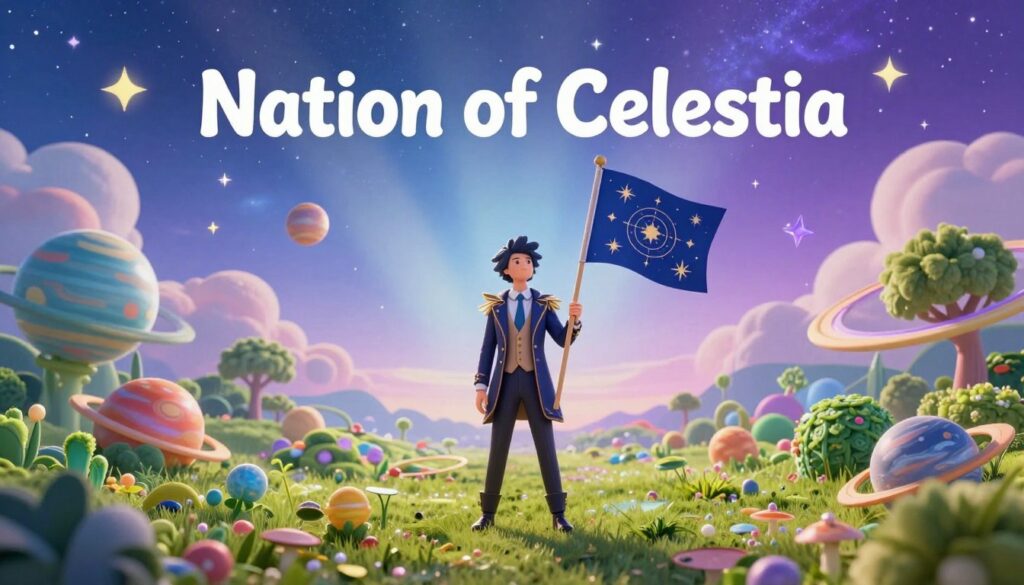
Celestia’s claim makes people talk about what it means to be a nation. As an autonomous territory, it challenges old ideas of statehood and law.
This claim also makes us think about the future of micro-nationalism. With new tech and our growing knowledge of the universe, Celestia could shape our views on global and cosmic citizenship.
In short, the Nation of Celestia shows the creativity and dreams of the micronation movement. Its claim makes us see things differently and encourages us to explore beyond traditional nation-states.
The Sovereign State of Absurdistan: Minnesota’s Satirical Nation
Absurdistan, in Minnesota, looks at small countries in a funny way. It’s part of the micronation movement. This place stands out because it’s all about jokes and satire.
Absurdistan makes fun of big political issues. It uses jokes to talk about being a country. It shows that being a nation doesn’t have to be so serious.
The leaders of Absurdistan do silly things to make a point. They use irony and jokes to comment on serious issues. This makes people think and question what it means to be a nation.
As a small self-declared country, Absurdistan adds to the micronation movement’s variety. It shows how creative and different this community can be. Absurdistan’s humor helps us see the micronation world in a new light.
Travel Like Royalty: Save Up to 60% on Your Next Adventure
Learn how to travel like royalty to US micro-nations with up to 60% off. Planning your next trip to these unique places can significantly reduce your travel expenses. By using our recommended travel services, you’ll save money and enjoy a
With discounts of up to 60%, you can see the world of US micro-nations in style. Whether it’s the Republic of Molossia or the Kingdom of Talossa, you’re in for a royal treatment.
The Most Fascinating US Micro-Nations and Their Eccentric Leaders
Micro-nationalism in the US has led to some fascinating micronations worldwide. These american microstates are more than just spots on a map. They reflect the personalities and beliefs of their leaders.
Take the Republic of Molossia, for example. It’s led by Kevin Baugh, who turned a part of Nevada into a sovereign state. Baugh has shaped Molossia’s identity, including its own currency and anthem. Molossia’s story shows how micro-nationalism can surprise us.
Another interesting micronation is the Kingdom of Talossa, founded by Robert Madison. It has its own language, culture, and even a national football team. Talossa’s unique leadership makes it stand out among american microstates.
The leaders of these micronations have different reasons for their actions. Some want sovereignty, while others seek creative outlets. Their stories amaze and offer a peek into the many faces of micro-nationalism.
In summary, the world of US micronations is full of captivating tales and characters. The leaders of these american microstates keep sparking curiosity and interest. This makes micro-nationalism a fascinating topic to explore.
The Republic of Lakotah: Indigenous Sovereignty Claims
The Republic of Lakotah is a unique case among unrecognized states in the US. It’s tied to the Lakota people, known for their deep history and culture.
Indigenous sovereignty is key for Native American communities. Indigenous sovereignty means Native tribes have the right to self-governance and land management. The Republic of Lakotah fights for recognition and freedom within the US legal system.
The movement is about self-determination and keeping cultural heritage alive. The Lakota people want to safeguard their lands, languages, and traditions. The Republic of Lakotah is a symbol of resistance against historical marginalization.
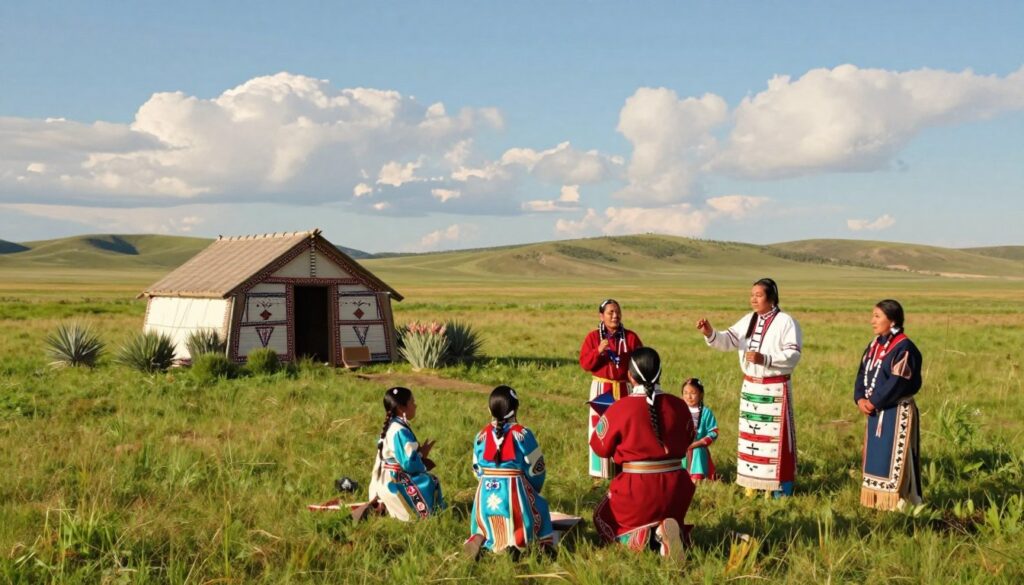
The Republic of Lakotah’s rise shows the ongoing talks between indigenous groups and the US on autonomy and rights. As an autonomous territory, Lakotah aims to establish a unique identity in the US’s diverse landscape.
The Kingdom of Calsahara: California’s Desert Monarchy
In the California desert, the Kingdom of Calsahara is a standout micronation. It’s part of the micronation movement. This self-proclaimed monarchy has its own identity, different from the areas around it.
The Kingdom of Calsahara is known for:
- Unique cultural practices
- Self-governing structure
- Distinct territorial claims
As part of the miniature nations in the US, Calsahara adds to the country’s diverse micronation scene. Its presence shows the creativity and variety in the micronation movement.
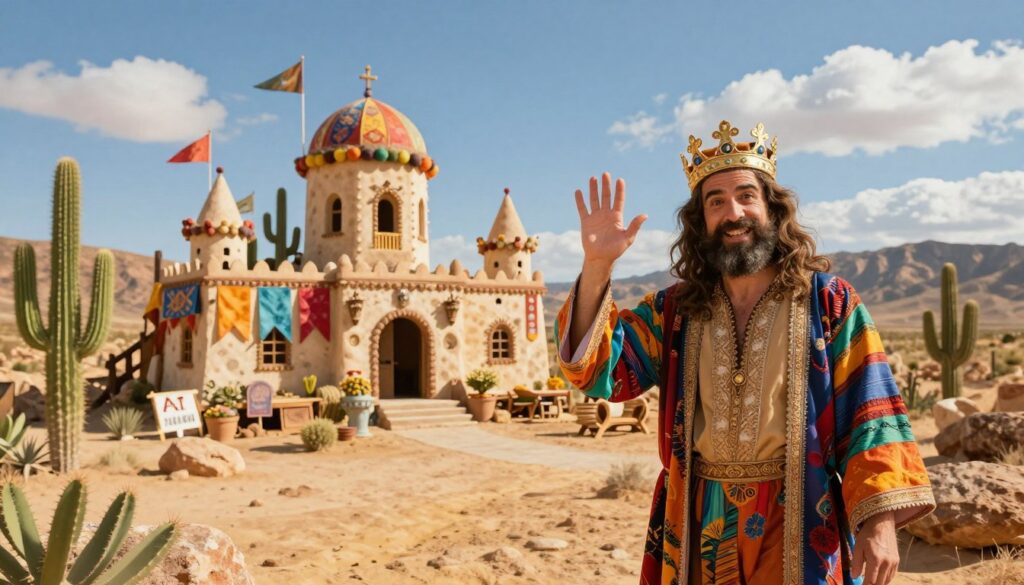
The Kingdom of Calsahara, though small, is important in the micronation world. It shows the innovative spirit and the need for self-expression that many micronations have.
In summary, the Kingdom of Calsahara is an interesting micronation in California. Its unique traits and role in the micronation movement make it worth studying.
Conclusion: Why Micro-Nations Continue to Captivate Our Imagination
The world of us micro-nations has won many hearts. They are known for their creativity, humor, and thoughts on sovereignty and identity. Places like the Republic of Molossia and the Kingdom of Talossa are big in American eccentricity.
These tiny nations keep our imagination alive with their mix of humor, satire, and deep thoughts on human life. They give us a break from the usual, letting us dive into big ideas in fun ways.
Looking into us micro-nations shows they’re more than just fun. They mirror our society’s values and dreams. By studying them, we learn about the human experience and how people show who they are.