
Dining in an unusual setting can turn an ordinary meal into a memorable adventure. This article highlights three actual cave restaurants in Missouri and Georgia, summarizes what makes each notable, and offers practical tips on planning your visit — from hours and reservations to what to bring.
Pack a small flashlight and a waterproof layer for damp spots, and expect cooler temperatures underground. Quick summary: one Missouri cave restaurant is known for its historic setting and hearty regional menu, another offers seasonal seafood and specialty steaks, and the Georgia venue combines guided cave tours with dinner service — see each entry below for location, hours, menu highlights, and recent reviews.
Discovering America’s Most Unique Underground Dining Destinations
Underground dining pairs dramatic natural settings with thoughtfully prepared meals, creating an experience that goes beyond a typical restaurant visit. In many cave venues, architecture and geology become part of the meal — from low ceilings and stalactites to cool, echoing chambers — so the setting is as much a draw as the food.
Imagine taking a short guided tour through a limestone passage, learning about mineral formations and the cave’s history, then being seated at a table set beneath a vault of stone. Typical tour-and-dine experiences vary: some tours last 20–45 minutes and focus on the cave’s geological highlights, while others include a longer interpretive walk that ends in the dining area.
Many cave restaurants publish hours and booking details on their official sites; reading recent reviews is also useful to see how service and food hold up over time. For visitors coming from farther away (for example, travelers from New York or other major cities), build extra time into your plans for travel and reservations — popular slots fill up quickly, especially on weekend evenings.
- Expect a short guided tour at many venues — check times and duration in advance.
- Read recent guest reviews for up-to-date notes on menu quality and service.
- Plan transportation and arrival times so you don’t miss the scheduled tour or dinner seating.
The History of Cave Restaurants in the United States
Cave restaurants in the U.S. trace their roots to the early 20th century when growing leisure travel and onsite tourism inspired entrepreneurs to create novelty dining experiences inside natural caverns. Early examples were often tied to show caves and tourist attractions rather than conventional standalone restaurants.
Infrastructure improvements — safer walkways, electric lighting, and better access roads in the 1930s–1950s — made it practical to seat guests underground. These upgrades gradually shifted cave dining from informal picnic-style events to organized, ticketed meals and dinner services run by owners or local businesses.
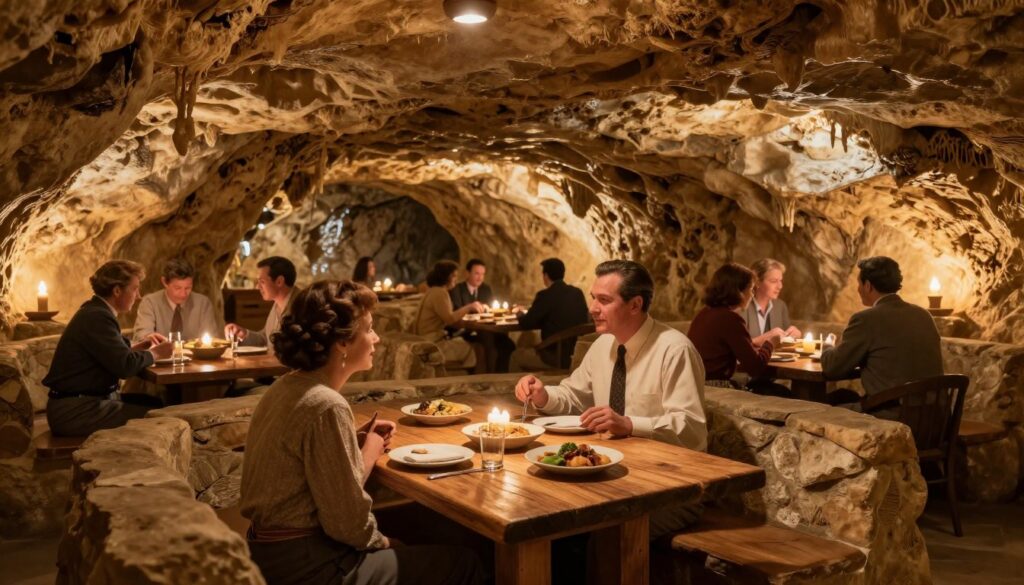
Key milestones and trends include:
- 1920s–1930s: Early novelty meals and tourist-oriented dining appeared at show caves as tourism expanded.
- 1930s–1950s: Electricity, improved lighting, and safer pathways allowed more regular dinner services and expanded hours.
- Late 20th century to present: Menu evolution toward regional cuisine and professionally run operations; marketing and online reviews began shaping visitor expectations and business models.
Owners and operators adapted over the years, balancing preservation and visitor comfort — adding heating or discrete lighting while protecting fragile formations. If you’re interested in the detailed history of a particular cave restaurant, check local historical societies or the venue’s archival information for dates and original owners, and consult recent reviews for how each location’s service and menu have evolved over time.
What Makes Dining Inside a Cave So Special
Eating in a cave blends natural setting and food in a way most restaurants cannot match. The geological backdrop — stalactites, stone walls and natural alcoves — contributes to an atmosphere that feels intimate and immersive, whether you’re sharing a casual table or celebrating a special occasion.
The cave environment also affects ambience and comfort: stable, cool temperatures make caves pleasant on hot days, while carefully installed lighting and discreet climate measures help keep service comfortable without damaging formations. Acoustics can be different too — voices may carry or echo — so many cave restaurants plan seating and lighting to enhance privacy and mood.
Cave venues often work well for events like anniversaries, small weddings, or birthday dinners, but capacity and private-room availability vary widely. Contact the restaurant in advance to confirm table layouts, event packages, and any limits on guest counts.
Key features to look for:
- Distinctive geological formations that form a dramatic dining backdrop
- Stable cave temperatures that provide a cool, consistent environment
- Thoughtful lighting and seating plans to manage acoustics and sightlines
- Options for reserving a private space or special table for events
In short, cave dining offers an atmospheric experience that combines natural history and culinary craft. Check recent reviews for notes on service and food quality, and ask the restaurant about accessibility, table sizes, and nighttime operations before you book.
Top Cave Restaurants You Must Experience
If you want a memorable night out, cave restaurants deliver an atmosphere that most conventional restaurants cannot match. These venues combine dramatic geology with thoughtfully composed menus, turning dinner into an immersive experience. Below are highlights of what to expect from top cave dining spots in Missouri and Georgia, plus practical notes on menus, bookings, and recent reviews.
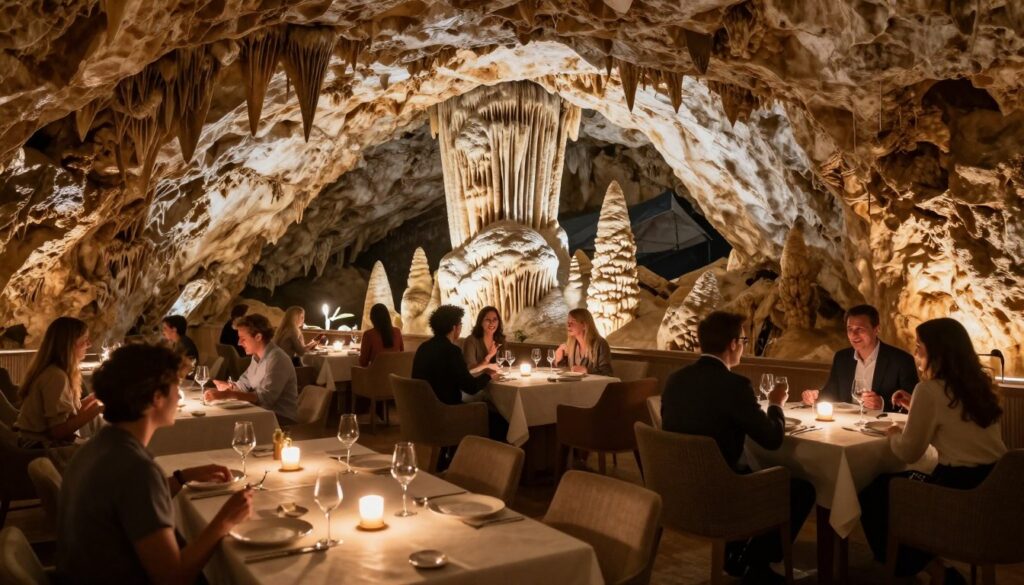
The cave setting often influences the menu and presentation: expect seasonal menus that emphasize regional food and local producers. Typical offerings across notable cave restaurants include seafood plates, grilled steaks, hearty house entrées, and composed salads — with choices that change by season and availability.
Signature Dishes and Menu Options
Menus at cave restaurants tend to balance comfort and refinement. Many venues feature:
- Appetizers highlighting fresh, seasonal produce and local small-batch ingredients
- Main courses that showcase regional meats and seafood, including steak and fish options
- Desserts that pair visual flair with local flavors
Because menus evolve, check each restaurant’s current menu before you go. Recent guest reviews are especially useful to see which dishes and staff-service levels are consistently recommended.
Planning Your Visit and Making Reservations
Reservations are commonly required, particularly for weekend dinners and special-event nights. Aim to book early — popular time slots and table options (including private spaces) can book out weeks in advance. Check the venue’s hours and reservation policy on its official page, and read recent reviews for notes on wait times, staff responsiveness, and how strictly the restaurant enforces booking windows.
Practical tips:
- Confirm the restaurant’s hours and the scheduled start time for any included cave tour.
- If you’re traveling from farther away (for example, from New York or another city), add buffer time to reach your reservation and allow for tour start times.
- Ask about special diet accommodations, how tables are arranged for groups, and whether the kitchen accepts advance orders for larger parties.
By planning around menus, hours, and popular dinner times — and by checking up-to-date reviews — you’ll increase the chances of a smooth, memorable cave-dining experience.
What to Wear and Pack for Cave Restaurant Visits
Smart clothing and packing make a cave restaurant visit comfortable and safe. Because caves hold a fairly steady, cool temperature, layers are the best choice — a light sweater or jacket over your outfit lets you adapt whether you’re arriving from a hot afternoon or an air‑conditioned car.
Footwear matters: choose sturdy, comfortable shoes with good tread for short walks or uneven surfaces between the parking area and the dining space. Many cave venues have steps, ramps, or gravel paths, so avoid high heels or slippery soles.
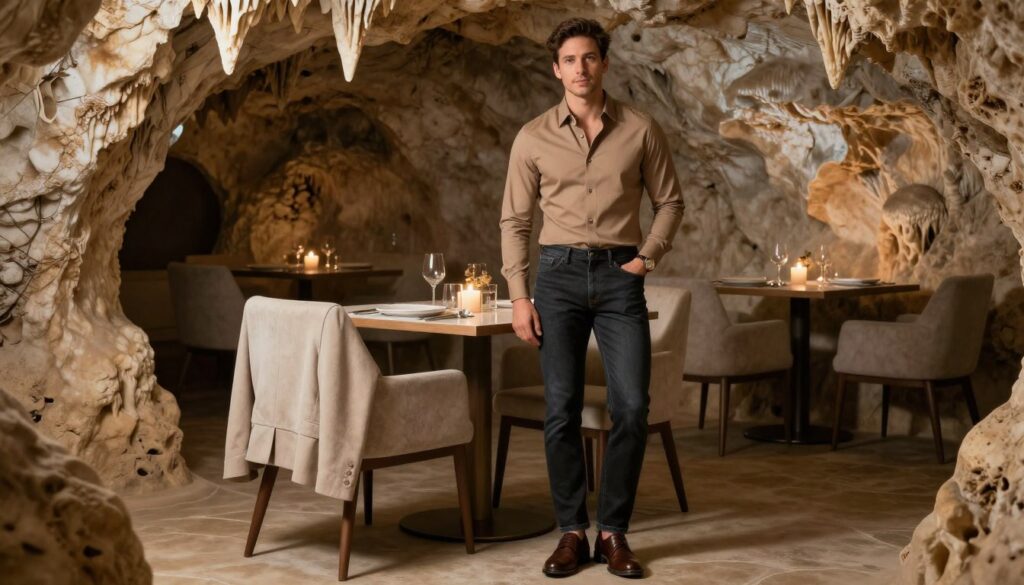
Pack a small day bag with essentials: your phone, wallet, a reusable water bottle, and a compact portable charger. If you plan to take photos, bring a small camera or a phone with good low‑light performance and a lightweight tripod only if the venue allows it — some restaurants restrict tripods or flash to protect the experience and fragile formations.
Checklist (quick):
- Layers (jacket or sweater)
- Sturdy, comfortable shoes
- Small bag/backpack, water bottle, and ID/payment method
- Compact charger and camera (check tripod/flash policy)
Capturing the Perfect Cave Dining Photos
Photography in cave restaurants can be rewarding but challenging due to low light and mixed lighting sources. Respect the restaurant’s rules (no flash or tripods if requested) and be considerate of other diners when composing shots of the space or your table.
Practical camera tips: use a wider aperture (f/1.8–f/4) if your lens allows, and raise ISO as needed (try ISO 800–3200 depending on your camera’s noise performance). A steady hand or a compact stabilizer helps; if tripods are permitted, they allow long exposures for crisp, atmospheric images. For smartphones, enable night mode and avoid over‑processing to keep the cave’s natural tones.
Composition tips: include elements of the cave (rock formations, lighting fixtures, table setup) to show scale and context, and shoot some closeups of menu highlights — a plated steak, local seafood, or a composed salad — to capture the food and the setting together. Finally, read recent reviews to learn whether the staff is photo‑friendly and whether certain times of night produce better lighting for photos.
Essential Gear for Cave Restaurant Adventures
A little prep goes a long way when visiting a cave restaurant. Pack sensibly so you can focus on the meal and the setting: comfortable clothing in layers, sturdy shoes for uneven paths, and a small day bag for essentials will cover most needs.
Light is an important consideration — caves are dim by design. Bring a compact hands‑free light (a small headlamp or clip light) only if the venue permits personal lighting; some restaurants limit extra lights to protect the ambiance and formations. Likewise, check policies on tripods and flash before you bring them.
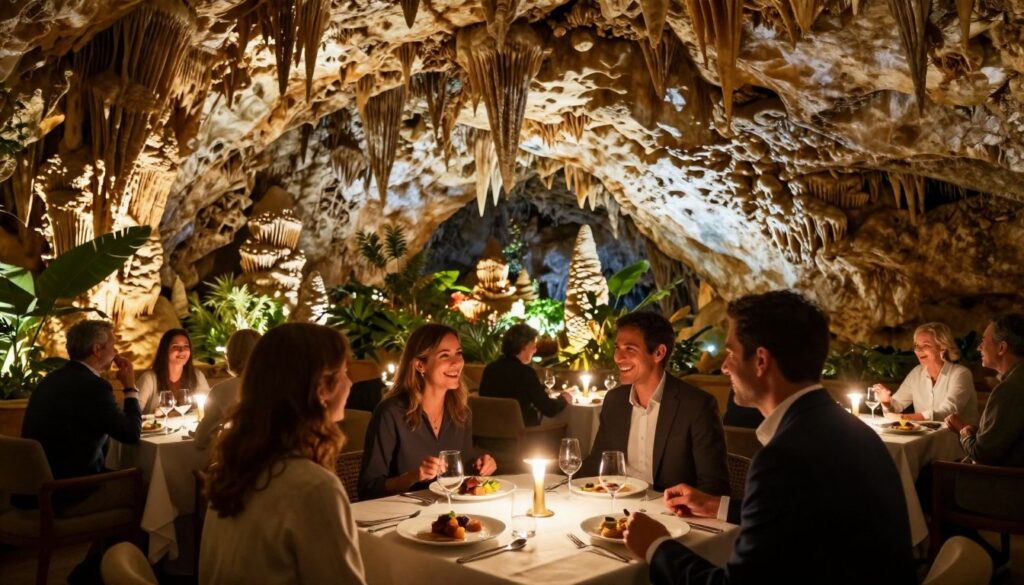
Other practical items to bring:
- A compact power bank to top up phones used for photos or navigation.
- A camera or smartphone with good low‑light performance (and a small stabilizer if allowed).
- A refillable water bottle and a small snack for before/after the meal if the venue permits.
With your gear sorted, you can focus on enjoying the cave’s atmosphere and the restaurant’s menu offerings.
Best Seasons and Times to Visit Cave Restaurants
Cave dining is appealing year‑round because caves maintain relatively steady temperatures; however, the best time to visit depends on your priorities. Spring and fall (shoulder seasons) are often ideal: milder weather outside, fewer crowds, and a comfortable contrast with the cave’s cool interior.
Timing tips:
- Book early‑evening dinner slots for the classic candlelit cave-table atmosphere; weekend nights are busiest so reserve well in advance.
- Check each restaurant’s posted hours and tour times — many venues run tours at set times that coincide with dining services.
- Read recent reviews to learn about crowd patterns and whether certain days or times offer a quieter, more relaxed visit.
Peak summer and holiday weekends tend to be busier; if you prefer a quieter experience, target weekday dinners or the shoulder-season months. Always confirm hours, reservation windows, and any special-event schedules on the restaurant’s official site before you go.
Combining Cave Tours with Your Dining Experience
Pairing a guided cave tour with your meal deepens the visit: you learn the geological story of the space, see formations up close, and then enjoy dining in the setting you just explored. Many cave venues coordinate tour times with dining to create a seamless guest flow, but the exact format varies by location.
Typical tour-and-dine setups include a short interpretive walk (20–45 minutes) that highlights stalactites, flowstone, or historic features, followed by seating in an adjacent dining chamber. Other venues offer extended tours that traverse multiple levels of the cave and end in a specially prepared banquet space.
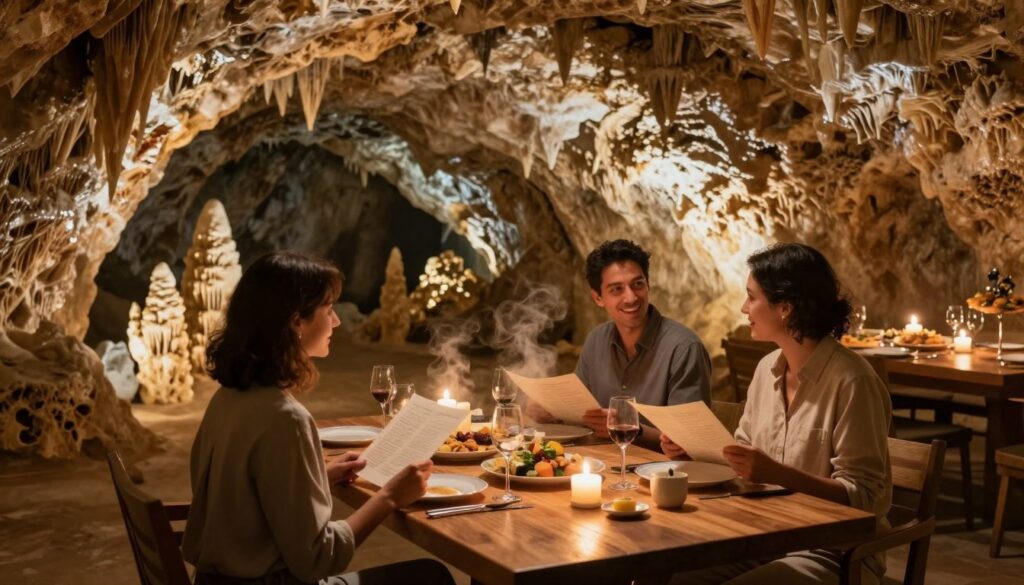
Plan carefully: check tour times, reservation hours, and whether the tour is included with dinner or sold separately. Allow extra time between arrival and your booked table so you won’t miss the tour start or feel rushed when seated.
- Confirm tour and dining times on the venue’s official site, and check recent reviews for timing tips.
- Wear comfortable shoes and clothing suitable for short walks on uneven ground.
- Ask in advance about combined packages, group orders, or private-room options if you’re planning a celebration.
Making the Most of Your Missouri Cave Restaurant Road Trip
A road trip that centers on Missouri cave dining mixes scenic drives, local food, and outdoor activities. Start by mapping the cave restaurants you want to visit and checking each location’s hours and parking availability so you can plan realistic drive times between stops.
Examples of planning considerations:
- Look up exact location and parking notes for each cave — some sites have dedicated lots, while others require short walks from public parking.
- Build in time for nearby sights (for example, state parks or a regional historic site) so your trip feels like a cohesive multi‑day outing rather than rushed stops.
- Reserve lodging in a nearby town or at local hotels well in advance, especially during peak tourist periods and weekend evenings.
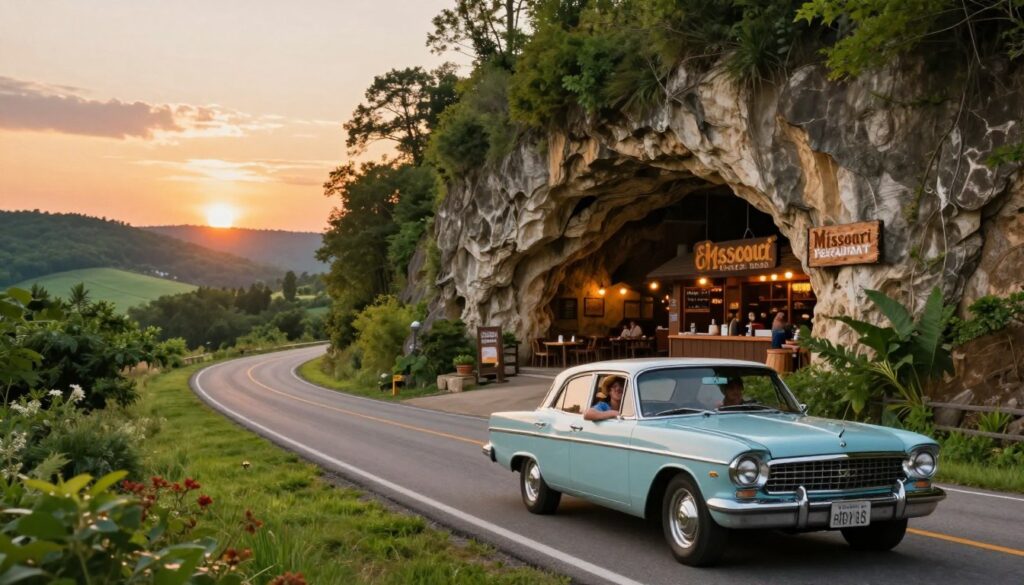
Practical tips for an efficient road trip:
- Check recent reviews for notes on parking, wait times, and the quality of food and staff service.
- If you plan multiple cave stops in a day, prioritize one dinner reservation and schedule earlier visits or tours for the other locations.
- Contact the venue about group menus or bar/room availability if you need a dedicated private space or plan to order a set menu for a larger party.
Finally, verify current operations before you go — some named caves may change offerings, hours, or whether they serve dinner inside the cave. Confirm menus, reservation policies, and parking details on each restaurant’s official page and in recent guest reviews to avoid surprises on the road.
Conclusion
Dining inside a cave combines natural history and thoughtful cooking to create a memorable night out. The cave restaurants profiled here — and others like them in Missouri and Georgia — offer distinctive settings, regional food, and an experience that differs from surface-level dining.
We covered the history of cave dining, what makes the ambience special, menu and reservation considerations, and practical tips on what to pack and how to capture photos. Before you go, check each restaurant’s official page for current hours, menu options, and reservation policies, and read recent reviews to confirm service and food quality.
Safety and logistics matter: confirm parking and accessibility, allow extra time for tours and travel between locations, and verify whether private rooms or special-event menus are available if you’re planning a celebration.
If you’re planning a cave dining outing, start by choosing a location, booking your table for the preferred dinner time, and reviewing recent guest feedback — that practical sequence will help ensure a smooth, enjoyable visit to these one-of-a-kind restaurants.